Sports event timing: what type of equipment and service to choose


In recent years there has been a great evolution of timing services for both professional sporting events and amateur sporting events.
Nowadays almost all running events, from trails to road races, require timing services. In addition, timing is also carried out for triathlon, mountain bike, road cycling, skiing, ski mountaineering, etc... going so far as even timing barrel races.
The first differentiation between timing systems is between passive system and active system.
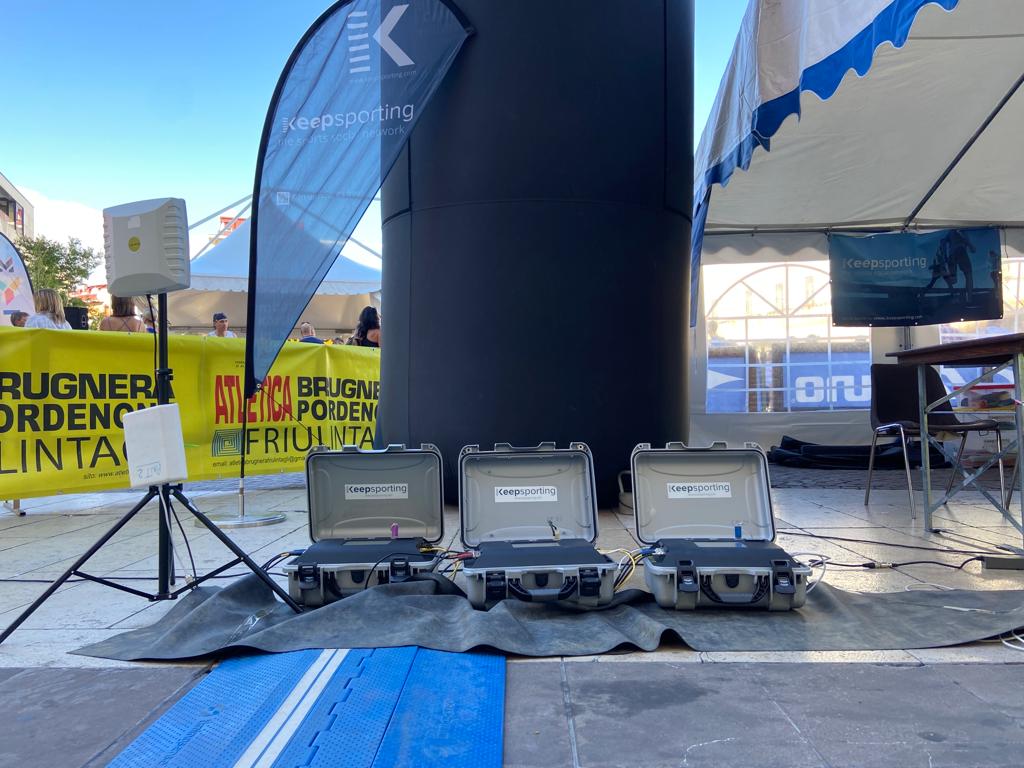
The passive timing system involves an antenna, positioned at the point where we want to detect the athletes' passage, which emits a radio signal and non-powered chips.
The active timing system, unlike the passive system, requires athletes to wear a chip powered by an internal battery.
If you are a sporting event organizer and need to decide which type of timing will be most suitable for your event, here are some suggestions:
The main strengths of the passive system are:
- Affordability (passive service generally costs less as the equipment cost is lower);
- Possibility of using disposable chips to attach to the bib (for running races) or on the front plate of the bicycle (for mountain bike races), which therefore does not require the recovery and cleaning of the chips at the end of the race;
- Lower cost of the chips;
- Disposable chips can be provided well in advance.
The main strengths of the active system are:
- Greater detection accuracy (readings are unlikely to be missed);
- Works well even with wet chips;
- Practicality of transport and assembly (no bulky antennas are needed, just a simple wire);
- Detections up to 120 km/h;
- Effective even if athletes position the chip incorrectly.
To increase the reliability of the passive system, a backup of the antennas is often used at the finish line and/or a double disposable chip is applied to the bib.
There are different types of chips: bib chip, ankle chip, wrist chip, baton chip (generally used in relays).
Regarding the antennas used in the passive system, there are different types, from aerial antennas to mat antennas. The former are easier to handle and have a long range, but are less precise as they cover a large area; the latter, on the other hand, detect the exact moment the athlete passes over them.
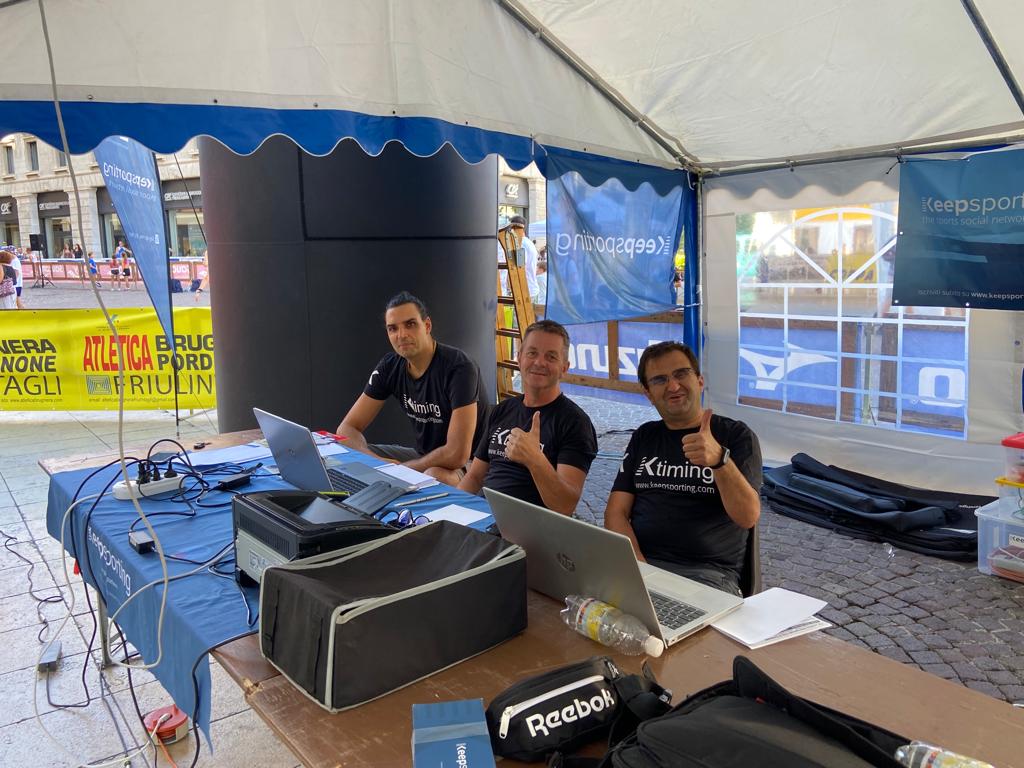
Keepsporting has been operating in the timing sector for some years, timing all types of sporting events: running, triathlon, skiing, etc...
It uses disposable passive bib chips for running races and reusable chips (passive or active), to be worn around the ankle for triathlons. For cycling races or other races, disposable chips or reusable chips, passive or active, are used as appropriate. The passive system used by Keepsporting has the best reliability coefficient on the market: 99.8% per line with the chip on the bib.
Photocells and starting gates are also used for time trial races in skiing, downhill, enduro, etc.
For 'ultra' races, GPS Trackers are used with live tracking and visualization of athletes on the course map during the race.
Some organizers of medium/small events do not have a very high budget to manage a professional timing service, so they opt for hybrid systems in which the timing service provides remote support and the organizer operates directly by recording the athletes' finish times. For these cases, Keepsporting offers the possibility of self-management through an APP: operators can record times by reading the QR codes applied to the athletes' bibs, counting on Keepsporting's assistance before and during the event.
If you are interested in a quote, please write to us at info@keepsporting.com.
Email: info@keepsporting.com
Instagram:https://www.instagram.com/keepsporting
Facebook: https://www.facebook.com/keepsporting