What does the increase in sports participation represent for event organizers?

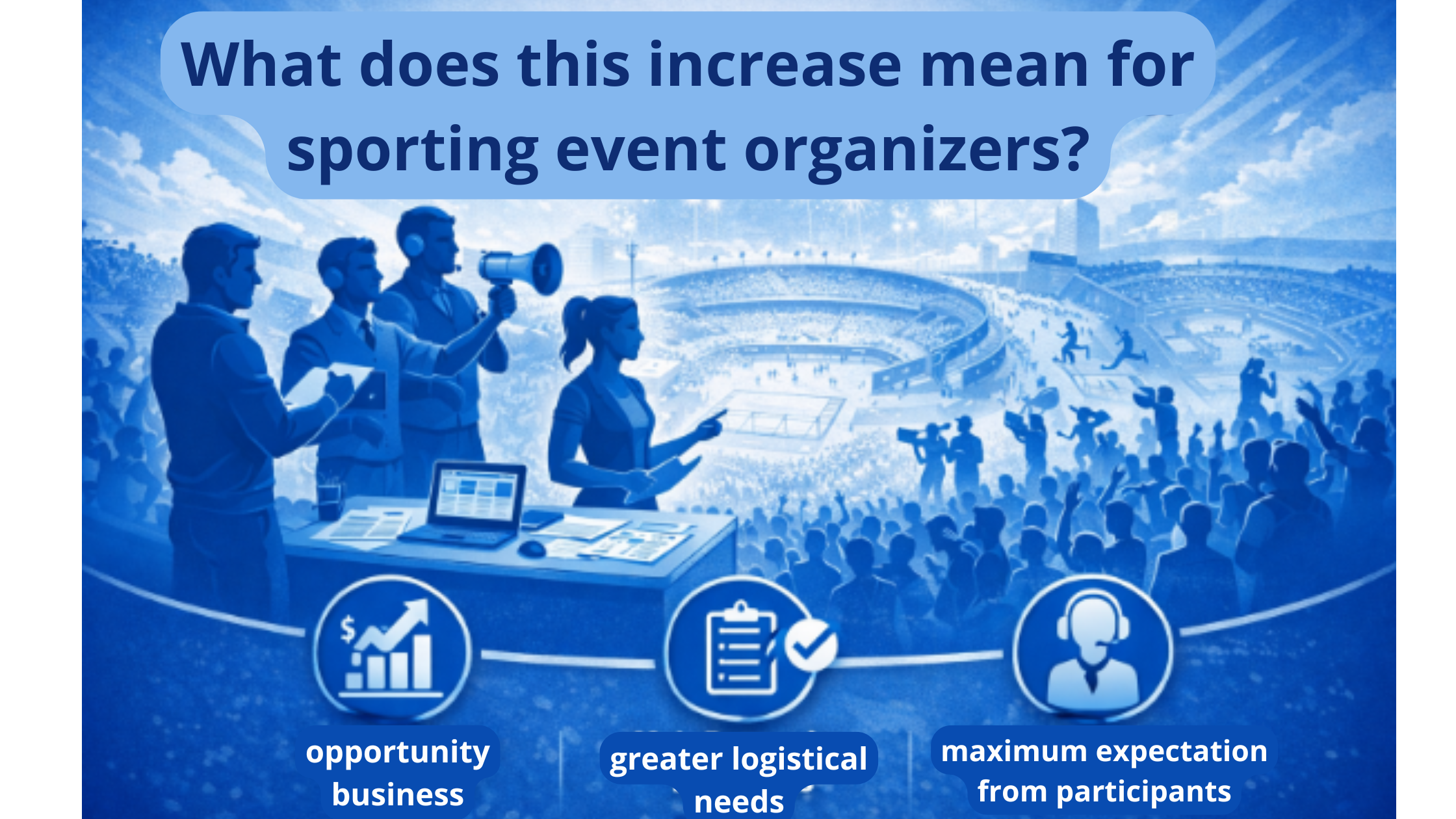
The growth in the number of people engaging in physical activity is not just a positive statistic for public health; it also represents a significant opportunity for sporting event organizers. More people walking, running, or cycling means a greater interest in accessible, well-organized, and welcoming sporting experiences.
The landscape has shifted: the audience is no longer predominantly technical and competitive. Today, sports attract beginners, families, groups of friends, and individuals seeking well-being, socialization, and a sense of belonging!
1. A more diverse audience with new expectations
With the increase in participants, events are beginning to welcome individuals with varying levels of physical fitness and distinct goals. Not everyone is there to break records or stand on the podium. Many wish to:
- Complete the course
- Feel motivated
- Experience something different
- Share the experience with others
All of this requires organizers to have a broader and more empathetic vision that goes beyond simple competition.
2. The experience is worth as much as the course
The route remains important, but it is no longer the only deciding factor. The overall experience is gaining significance:
- Clear communication before the event
- Simple and intuitive registration
- Well-organized information
- A warm welcome
- A positive atmosphere on the day of the event
Participants want to feel welcome from the moment they register until the post-event phase.
3. The event as a life experience, not just a race
Sporting events are no longer just about "selling a race"; they aim to offer a complete experience. Music, interaction, photography, video, medals, and celebratory moments are integral parts of this new phase. Organizers who understand this mechanism create memories—and memories are what drive people to return and recommend the event to others.
4. More human and less technical communication
The way we communicate is also changing. Accessible language, motivating messages, and content that speaks to beginners make all the difference. Instead of focusing solely on times, elevation, or difficulty, the events that stand out show:
- That everyone is welcome
- That you don’t need to be a professional athlete
- That the most important thing is to participate
Tips for organizers to leverage this growth
- Simplify registration: Fewer steps, clear information, and a fast process; the Keepsporting platform specializes in exactly this.
- Create accessible categories: Walking, shorter routes, or non-competitive modalities.
- Invest in communication: Explain everything in a simple and objective way.
- Value the participant: Certificates, photos, thank-you notes, and an active post-event engagement.
- Build a community: Stay in touch after the event and incentivize their return.
Conclusion
The increase in sports participation represents a true turning point for organizers. Never before have so many people been interested in staying active, participating, and living experiences through sport.
Those who can look at this new audience with a more human, inclusive, and strategic approach will gain a competitive advantage. Successful events in 2026 will not just be those that are technically flawless, but those capable of transforming a simple race into a memorable experience.
Ultimately, organizing a sporting event today is about connecting people; and those who do it well build events that grow alongside the sport itself.